A website forelectricians.
Show the work you want to be called for.
A homeowner planning a rewire wants to know what will happen to the house. A landlord needs an inspection and a usable report. A factory manager has a shutdown window to fill. We design and build your electrician website around the work you actually take on, then host it and help you keep it current.
From £15/mo, plus a one-off build pack from £29.

The house comes first: an opening built around careful access and putting things back.
A design example. Pennant is not a customer.Before the phone rings
Give each customer a route into the right conversation.
Domestic, commercial and industrial work can belong to the same firm without needing the same opening paragraph. Someone choosing you needs to recognise their job, understand how you approach it and know what to send next. Organise the site around those decisions, rather than making everyone work through a long list of electrical services.
The homeowner
A house rewire needs an explanation of the disruption.
Show how you assess the building, plan access and agree the scope. Explain what happens to furniture, floorboards, plaster and decorating, and which parts are included in your quote. Use photographs of the work and the making good. If a house will be occupied, explain how that affects planning without promising that every customer can stay throughout.
The landlord
An electrical inspection needs a clear scope and report.
A landlord wants to arrange access with the tenant, understand the price basis and know how the report arrives. Call it an electrical inspection (EICR), then explain what is covered and how findings are discussed. Keep the inspection and any remedial work distinct, so an enquiry does not sound like an agreement to unspecified repairs.
The charger customer
An EV charger enquiry needs the right information first.
The customer may have chosen a charger before considering the cable route or existing supply. Say what your survey involves and which photographs or property details help you prepare. Make the difference between a starting price and an agreed installation price clear. Explain who handles the necessary network notification without attaching a delivery promise to someone else's process.
The site manager
A commercial job needs a way to discuss access and downtime.
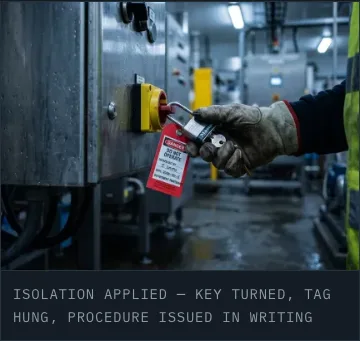
A site manager is buying work that fits the building's operation. Explain how you agree the scope, access arrangements, isolation and handover. Let them send the site, nature of work and proposed window. Separate planned enquiries from breakdown attendance; if emergency cover is only for contract customers, put that qualification beside the contact route.
What we read
We found plenty of services, but little help with the price.
We read the front page of 1,132 UK electrical contractors in August 2026 and recorded what each one said and offered. Other pages were not read. These figures describe that sample, not the whole trade; solar, security, fire-alarm, audio-visual and data-cabling firms, suppliers and manufacturers were excluded.
4.8% showed any price.
A useful price needs a scope beside it. You can show the basis for a standard inspection or call-out without pretending to quote a rewire from a photograph. State what is included, how VAT is treated, what could change the price and when the customer gets an agreed figure.
67%served homes and businesses.
That range deserves more than a combined service list. A domestic customer and a facilities manager should each find relevant work, terms and enquiry details. You do not need separate brands to give them separate routes.
93.9%offered a phone route.
Make it useful: show the area covered and when calls are answered. If you cannot answer while working, give people a planned-enquiry route as well. A contact form should not imply it is being watched for emergencies.
35.2%mentioned EV chargers.
Naming the service does not explain the installation. Show how the survey, equipment choice, cable route and quotation fit together. Keep grants linked to current official guidance instead of leaving an old amount in a banner.
28.6%named NICEIC.
Show your actual registration and a way to check it. NICEIC is one of several schemes, not a membership every electrician must hold. Our scan did not inspect other pages or verify the firms' registrations, so this is a finding about presentation, not competence.
Electrician website examples · domestic
An electrical website can start with a house, not a fuse board.
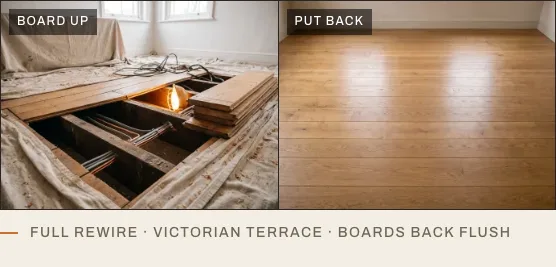
Pennant Electrical is an example build for a fictional domestic rewiring firm in Hereford. It specialises in Georgian townhouses, Victorian terraces and timber-framed farmhouses. The opening puts a floorboard and a dust sheet in view before listing the work: the homeowner's concern is what happens to a building they care about.
Show the method while the visitor is looking at the room.
As you scroll, a board lifts to reveal the space underneath. The opening then settles on the promise to put the house back and an invitation to arrange a look. The motion explains access to the wiring; it belongs to the job rather than decorating an unrelated photograph.
Pennant's written method covers protection, access and reinstatement. Furniture is covered before the tools come out. Cable runs are planned and a written quote comes before work. Boards, plaster and decorating appear in the same explanation. Those are the questions a homeowner can use to compare quotes; “tidy and professional” would leave them guessing about the scope.


Let the finished room carry some of the explanation.
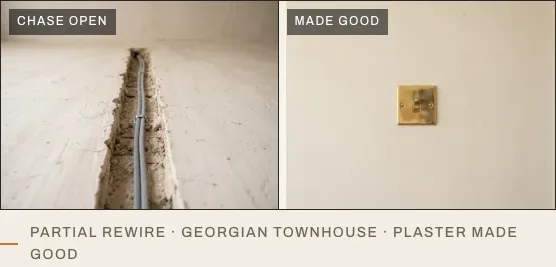
The example's making-good photographs show boards closed again and plaster finished. They sit alongside the work in progress, so the visitor can see what reinstatement means. A real firm's version should use its own jobs, with permission and an honest account of what was included. An attractive finished room alone cannot establish which work the electrician carried out.
The demo does not show Part P or competent-person registration. It demonstrates the presentation of a specialist service, not a complete model for a real firm's credentials. We would ask for the actual registration and notification arrangements before writing that part of your site. Pennant's invented reviews are not evidence about ThemeSmith or a real contractor.
Electrician website examples · industrial
A factory needs to see how the work fits its window.
Verrill Industrial Electrical is an example build for a fictional contractor in Scunthorpe. It concentrates on factory shutdowns, food-production lines and washdown areas. Its opening uses an overnight window, 22:00–06:00, to make the kind of instruction immediately clear. That is the fictional business's offer, not a promise about your availability or our website service.

Make the scope readable before asking for a job sheet.
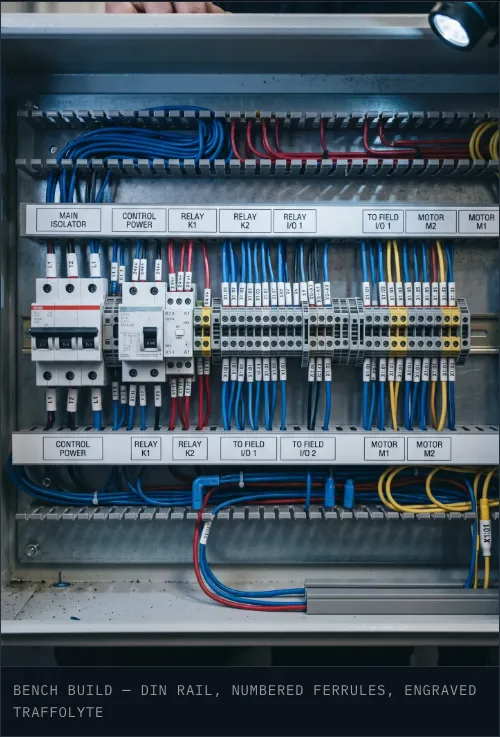
The services are arranged as a job card: planned shutdowns, panel builds, distribution, fault finding and isolation procedures. A visitor can connect the work to an operational need. The enquiry form asks about the site, the job and the wanted window, rather than giving a plant engineer an empty message box with no guidance.
The panel-building section follows the work from schematic through testing and installation. It explains what is done before the panel reaches the site. For a real contractor, drawings, sample documentation and photographs can support that explanation, provided the client permits publication and sensitive plant details are removed.
Use motion to make a less visible service understandable.
Verrill's thermographic section sweeps a heat-camera view across a switch panel. The change of view explains what the survey is looking at. The example tells a fictional repair story around it; we are showing the design, not borrowing that story as proof of a prevented breakdown.
The useful lesson is the connection between the visual, the service and the next conversation. Your version needs your own scope, working arrangements and evidence. A dramatic thermal image is not a diagnosis of a customer's installation, and a website cannot replace the contractor's assessment or site procedures.


What the real sites get right
The clearest real sites explain what the customer is buying.
These are real UK front pages from our scan, described without naming the firms. Their offers belong to those businesses; they are not ThemeSmith customers or prices we suggest you copy.
A Dorset electrician gives routine jobs a starting point.
Its main jobs each have a starting price, with registration visible in the header. A visitor can see that an inspection, a charger and a rewire are different purchases. The useful part is the organisation: show your own current basis and inclusions for work you can describe reliably, then explain which jobs need a survey.
A Glasgow charger installer explains the survey.
It combines fixed installed prices with a virtual survey and explains the information needed before the work. That makes the preparation visible to the customer. If you use photographs or a questionnaire, say what they establish and when a site visit may still be needed; another firm's process is not automatically suitable for yours.
A Milton Keynes testing firm makes the paperwork visible.
It prices PAT testing by appliance-count bands and says what is included, including the report, certificate and small repairs. A business customer can compare more than the price of a sticker. Describe the records your own customer receives, how they are supplied and the scope of any included repairs.
A London inspection specialist keeps the offer narrow.
Its landlord inspections have fixed prices and a stated digital-report turnaround. It does not make the customer read about every possible electrical job first. Give a specialist service its own explanation and enquiry route, but only advertise a turnaround you can deliver under the conditions you state.
The website, page by page
Build the pages around the jobs you accept.
A focused electrician can start with a substantial single page. A contractor covering different customers or services may need separate pages so the detail stays easy to find. Pennant and Verrill each use a single main page, plus privacy information. The right size follows the work, not the size of someone else's menu.
The opening
Home: make the service and the patch clear.
Say what you do, who it is for and where you work. Put actual registration where it can be checked, with a relevant photograph and a route to discuss the job. Separate emergency attendance from planned work. If you only offer breakdown cover to existing contract customers, do not let a general call button suggest otherwise.
The installation
Rewires and upgrades: explain the assessment and making good.
A rewire page needs the survey, quotation and access process, along with the limits of reinstatement. A consumer-unit page should explain what the assessment covers and which documentation the customer receives. Avoid treating an existing installation as suitable for a change before you have assessed it. Photograph the details that help explain your method.
The report
Inspections and testing: distinguish the different services.
An electrical inspection (EICR) concerns the fixed installation; PAT testing concerns appliances. Give each the appropriate scope, price basis, access requirements and reporting process. Explain how observations and further work are discussed. Do not make a booking sound like a promise that the installation will receive a satisfactory report.
The charger
Chargers: show the route from enquiry to an agreed installation.
Explain the information you need, the survey and the quotation. State what the installed price covers, and how additional work is agreed. Keep charger options tied to the products you actually fit. If you discuss grants, point to current GOV.UK guidance rather than publishing amounts or assuming the customer qualifies.
The contract
Commercial work: give the decision-maker something useful to send on.
Show the sectors and environments you know, alongside scope, access and handover arrangements. A facilities manager may need to share the page with someone approving the job. A relevant project description and a clear account of documentation help that conversation more than a page of unexplained equipment photographs.
The people
About and contact: make the working arrangements believable.
Show the real team and the qualifications or registrations that apply. Explain your service area without making every nearby town look like a staffed branch. Planned-enquiry forms can ask for the address, job type and access constraints; do not ask visitors to remove covers, expose wiring or carry out a test to complete a form.
Registration and responsibilities
Get the credentials and legal wording right.
Your customers do not need a regulations lecture. They need accurate statements about your registration, the work covered and the documents they will receive. We use your actual details, not a row of badges borrowed from another electrician's website.
Part P is not another name for NICEIC.
In England and Wales, some domestic electrical work is notifiable under the Building Regulations, including new circuits, consumer-unit replacements and certain work in bathrooms. Electricians commonly use a competent person scheme, such as NICEIC or NAPIT, to self-certify work within its scope. Other notification routes exist, and the detailed rules differ between England and Wales. Scotland and Northern Ireland have different systems. Describe the route that actually applies to your work.
Explain the inspection without promising its result.
For private rented homes in England, the installation must be inspected and tested by a qualified person at least every five years, and tenants must receive a copy of the report. An earlier inspection may be required by the report. Spell out Electrical Installation Condition Report once, then use electrical inspection (EICR) in the customer-facing explanation. Keep references to the Wiring Regulations as BS 7671, without edition or amendment numbers that can become outdated.
Do not invent a yearly PAT requirement.
Businesses must maintain electrical equipment safely, but PAT testing is not a universal annual legal requirement. The appropriate checks depend on the equipment and its use. Explain your service and the records you provide without turning a suggested testing programme into a legal deadline. Link to HSE guidance when explaining the distinction.
Official guidance: Part P in England, electrical work in Wales, competent person schemes, rented-home electrical inspections, HSE on PAT testing, chargepoint grants.
Useful with any builder
Make the enquiry useful before you add more promotion.
Check the route from the job page to your phone.
Open the site on a phone and follow an inspection or rewire enquiry through to the message you receive. Check whether it includes the job type, location and preferred contact details. Make sure any reply describes the next step accurately: a request for a survey is not a confirmed installation slot.
Keep your public details and evidence current.
Match your website and Google Business Profile for the business name, service area, phone number and hours. Check that registration links still lead to your entry. Ask permission before using photographs or reviews, remove addresses and personal details from documents, and describe the work actually shown. Keep a completed job separate from a claim about what the next one will achieve.
Website design for electricians
Choose how much website work you want to take on.
A website builder for electricians can suit a small firm with a simple service and someone willing to maintain the words, photographs and enquiry route. An electrician website template can provide a starting layout. It cannot decide what your rewire quote includes, which customers your breakdown cover serves or whether your registration wording is current. Check how easily you can change those details before choosing it.
With ThemeSmith, we write the brief with you, design and build the site, and host it. Your assistant helps with later edits, paid in credits. Bring the details that belong to your business: the jobs you want, the areas you cover, your working arrangements, registration and photographs you have permission to use. We turn them into a site that explains the service clearly.
The build is one-off. Keeping it live is monthly.
Choose the plan for your websites and ongoing work, and the build pack for the pages you need.
Monthly plans
Edits with your assistant use credits.
One-off build packs
1 page
3 pages
5 pages
Each includes 30 days of Forge edits after the build, paired with your first month on a plan. Add pages any time, priced per page. You see the price before you pay.
Cancel in two clicks from your account. Your site stays live until the billing period ends, your domain stays yours, and we send a static snapshot if you leave. Failed builds are not charged; a person follows up the next working day. There is no introductory rate that runs out.
Get startedQuestions electricians ask
Before you choose your electrician website.
Can domestic and commercial work share a site?
Yes. Give each customer a clear route to relevant services, evidence and working arrangements. They do not need to read the same explanation just because the same team does the work.
Do I have to put prices on the website?
You can explain your quotation process without publishing a price for every job. Where you show a starting or fixed price, keep the scope, VAT treatment and conditions beside it.
Can I start with a single page?
Yes. A focused page can cover the service, evidence and enquiry route. Pages can be added later on any plan, priced per page with the price shown before you pay.
Can you add my NICEIC or NAPIT details?
Yes, using your actual registration and the correct wording for its scope. We will need the details and any permitted assets from you. We do not invent memberships or imply one scheme is compulsory for every electrician.
Are Pennant and Verrill real customers?
No. Both are example builds for fictional businesses. They demonstrate different design decisions for domestic and industrial work. Their reviews, jobs and service promises are not customer evidence for ThemeSmith.
Will a new website guarantee more enquiries?
No. We do not promise rankings or enquiry volumes. The work is to explain your services, show appropriate evidence and make it clear how the right customer can contact you.