A website forestate agents.
Show people the place. Show them who knows it.
Your next vendor wants to see how you would present their home. A buyer wants the details behind the photograph. A landlord wants to understand your service and fees. We design and build your agency website around those decisions, connect it to your existing listings feed, then host it and help you keep it current.
From £15/mo, plus a one-off build pack from £29.

The seafront opens the site. Homes for sale and homes to let are the next choices.
The agency and its listings are invented to show the design with stock on it.The first practical question
Your website works with your property software.
We connect your existing listings feed when you join. You keep publishing from your property software as you do now, and the website updates itself. That leaves the public site free to feel like your agency, with your photographs, your local knowledge and a clear route to the right person in the office.
You publish
Your property software
We connect
Your existing listings feed
The website updates
Your agency website
Keep publishing from your software.
Your property records remain where your team already works. Tell us what you use and how the listings feed is supplied when we put the brief together. The connection is part of joining; there is no need to choose a website by whether its example stock resembles yours.
Give the property details room.
A good-looking property grid is only the beginning. Buyers and tenants need to inspect the photographs, read the description and find the practical information before deciding to enquire. We build the website around the published information in your feed, including the material information you hold for the listing.
Check the journey from record to enquiry.
Before launch, review the published details against the source record. Check a change of price, an updated photograph and a change of availability. Then follow the enquiry route from a property on a phone: the office should know which home the person means. Treat the stock and the route to the negotiator as part of the same review.
What we read
Almost everyone names the town. The useful detail comes after that.
We read the front page of 1,102 UK estate and letting agency websites in August 2026 and recorded what each one said and offered. Other pages were not read. These findings describe our sample, not every agent in the UK.
96.9% named their areas.
A town name helps someone establish that they have found the right place, but it is rarely enough to choose an agent. Show the kinds of homes you handle and the differences between the neighbourhoods. A seller can then see whether you understand the market their own home belongs in.
17.4% led with local knowledge.
The claim needs something underneath it. Explain the questions people ask about a particular street, the housing stock or getting to the station. Use photographs that belong to the area. Avoid a page for every nearby town if the only thing that changes is the place name.
32.1%offered a free valuation.
The offer is familiar; what happens next is often less clear. Distinguish a request for a visit from an instant online estimate. Say who will contact the owner and what the appointment involves. Ask enough to arrange a useful conversation, without making someone complete a property questionnaire before they can speak to you.
10.9%showed a fee percentage.
A percentage needs its basis, what it covers and the VAT treatment beside it. If the arrangement depends on the service, explain that. Someone comparing sales instructions or letting management should not have to infer the terms from a large headline figure. Our scan did not read the separate fees pages, so this is not a compliance finding.
49.4%credited a website supplier.
Many of those suppliers are property-software and agent-website firms. An agent is right to ask how a new site will work with existing stock. Put that question near the beginning of the discussion. The connection matters, but it should not prevent the public site from explaining what makes the agency worth speaking to.
Estate agent website design
Groyne & Gable makes the town part of the browsing.
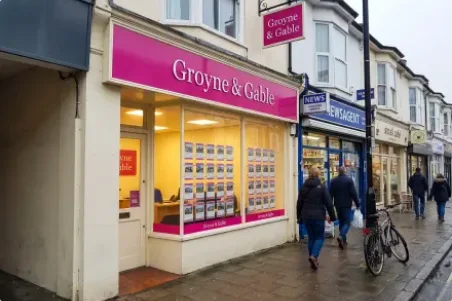
This is an example build for a fictional estate and letting agency on the Strand in Worthing. Its property listings are invented to show the site with stock on it. We are showing the design decisions, not a customer result or evidence of an operational listings connection.
Begin with somewhere recognisable.
The homepage opens on Worthing seafront, looking along the promenade towards the pier. The agency's name and location sit with the picture, followed by separate routes to homes for sale and homes to let. The scene explains where this business belongs before a visitor has read a service description.
The office photograph then gives the business a place on the Strand. Opening hours, a phone route and directions are close to the explanation of its work. For a real agency, a current photograph of the office and the people customers will meet can do more than a row of awards without context.
The stock
Let someone browse as a local would.

The sales page groups homes by part of town and offers an area filter. Street, property type, bedrooms and guide price sit with the photographs. The lettings page has its own list, showing rents and availability. Buyers and tenants can follow the route that fits them without translating a sales page into a rental enquiry.
There are six sale listings and six lettings in this example. Their purpose is to demonstrate the layout, not suggest that these homes are available. A real site must bring the full published property information through from the agency's software, rather than treating the photograph and headline price as the complete listing.
The patch
Explain the differences between nearby streets.
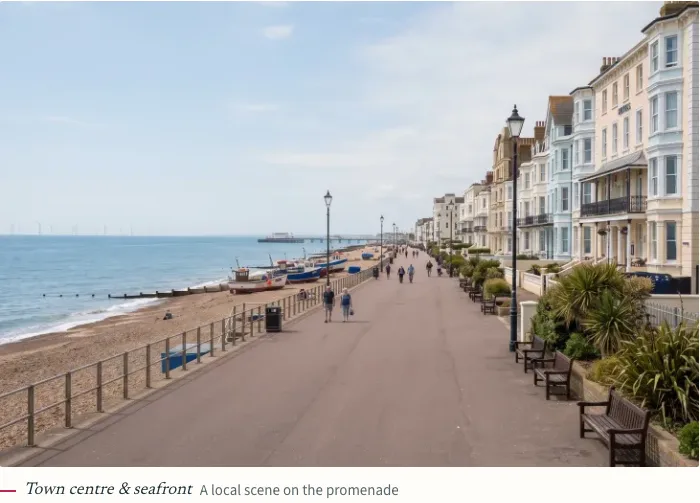
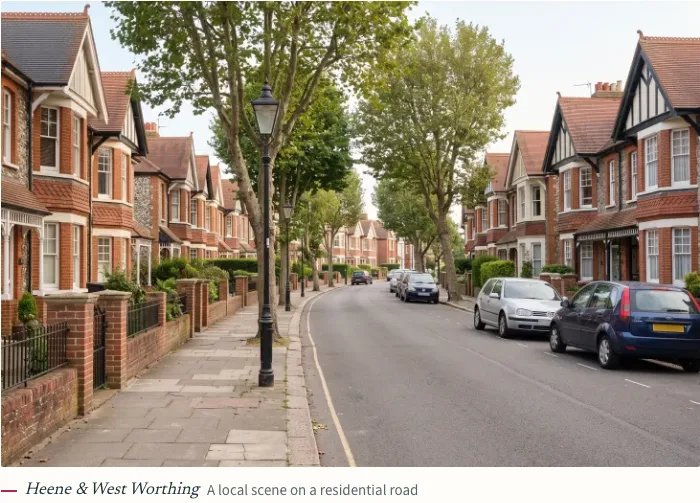
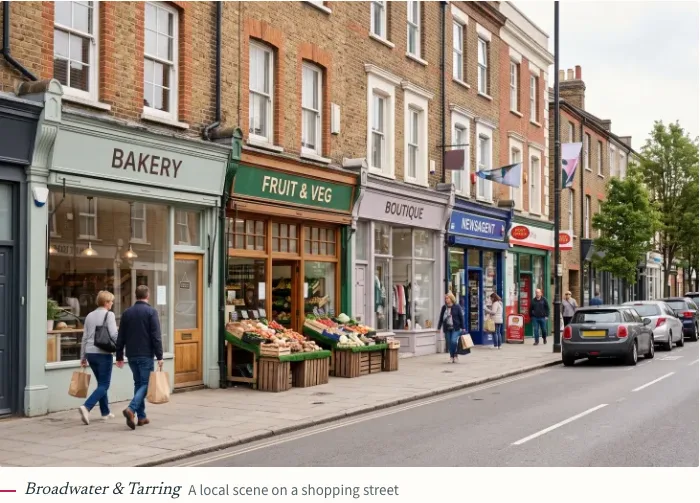
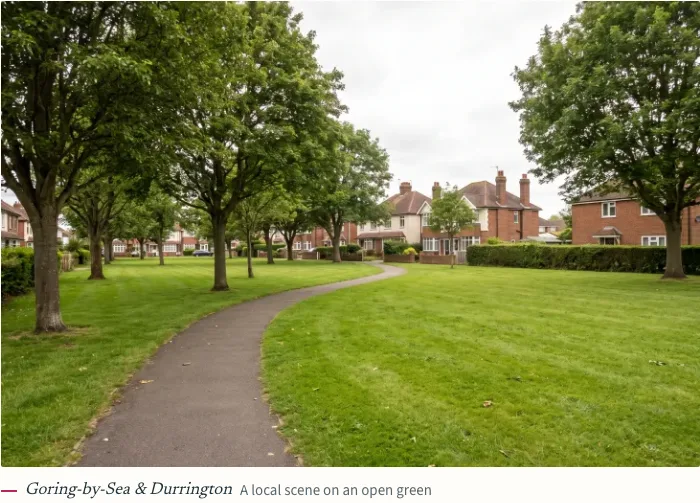
Area-guide crops from an example build for a fictional business. On a phone, swipe or scroll to see the next view.
The homepage's notes cover the town centre and seafront, Heene, Broadwater and Goring-by-Sea. They describe housing and everyday life in ordinary language. The longer Information page develops that approach with the things a visitor should ask about, such as parking and the details of a converted flat.
That is useful local knowledge: it helps someone form a better question. Your version should come from the people who handle those streets. Keep school admissions, travel claims and other changeable details tied to current sources, and avoid promising that a postcode will suit every household.
The Information page also separates buying, selling, letting and renting into their own sequences. That is a useful structure to borrow. Its demo content is not a substitute for your own terms, fees and current guidance; those need to be supplied and checked for the real business.
What the real sites get right
The best real sites sound like the people in the office.
These are real UK front pages from our scan, described without naming the firms. None is a ThemeSmith customer claim. What is worth borrowing is how specifically each explains its business.
An East London independent describes its behaviour.
It talks about turning up, returning calls and doing the paperwork, with listings and prices just below. The voice is ordinary and direct. An owner can imagine dealing with the firm because the promises describe a working relationship. Write about what your team actually does during an instruction; a claim to exceptional service leaves much more for the reader to guess.
A market-town agency draws a clear boundary.
The family-run Leicestershire firm says it works within ten miles of its office. Street-level listings and an online valuation route support that focus. The boundary makes the claimed knowledge believable. An independent does not need to present itself as covering everywhere: name the patch you serve well and make it easy for an owner on the edge to ask.
A Devon independent puts the homes beside the conversation.
Guide prices for local homes appear up front, with booking and WhatsApp routes nearby. Its writing sounds familiar with the local property scene. The useful lesson is the proximity: a visitor can inspect a home and then ask about it. Keep the property reference attached to that conversation so they do not have to describe the same listing again.
A rural specialist explains the wider instruction.
The firm covers south-west Scotland and the north of England, handling farmhouses, farms and cottages alongside relationships with solicitors, accountants and planners. That is a different proposition from a high-street flat sale. If your work includes specialist property, explain the questions and professional relationships involved, with evidence that belongs to your actual practice.
The website, page by page
Give each visitor a route that matches their decision.
The page plan should follow your agency's work. A sales-only business needs a different site from one managing rented homes as well. Several offices may share a website; an office is not automatically a separate site or plan.
The agency
Home: establish the agency and its patch.
Show where you work, the homes you handle and the people behind the service. Put routes for selling, buying, letting and renting where they are relevant. Let current stock demonstrate how you present a property, while keeping a valuation route visible for the owner who has come to choose an agent rather than browse homes.
The properties
Sales and lettings: let the stock be inspected.
Give each listing its photographs, description, price or rent, material information and a clear enquiry route. Keep the distinction between sale and rental terms visible. Filters should reflect the stock you actually carry and make an empty result understandable. Someone who finds nothing should be able to adjust their search or tell the office what they need.
The instruction
Selling: explain the instruction before requesting it.
Describe the valuation visit, preparing the particulars, viewings, offers and the work between an agreed sale and completion. Show who handles each part and how the owner hears from you. Put the fee basis, contract terms and any additional charges within reach. Avoid making a valuation estimate look like a promise about the eventual sale price.
The service
Landlords: distinguish finding a tenant from management.
Explain which work the agency undertakes and which responsibilities remain with the landlord. Separate tenant-find, rent collection and management where you offer them. Describe the handover and repair-reporting route. A landlord comparing services needs the scope alongside the fees; a long list of tasks with no boundary does not tell them what they are buying.
The local knowledge
Areas and people: make the knowledge identifiable.
Let the staff who cover an area explain its housing and the questions they hear. Use real local photographs with permission. Branch pages should show the office, opening hours, contact routes and the patch served. Keep staff details current so the person named on the website is still someone a visitor can reach.
The essentials
Fees, protection and contact: make the essentials easy to find.
We build the fees page in. Keep it linked from the navigation or footer and from the relevant service pages. Contact should separate a viewing enquiry, a valuation request and a landlord conversation, with the property or office carried through where appropriate. Give customers a clear complaints route as well as a sales route.
For letting agents in England
Fees and protection belong on the website, in plain sight.
For a letting agent in England, publishing fees online is a legal duty, not an optional way to stand out. Show the applicable fees including VAT and what they cover. The website must also identify the redress scheme and, where the agent holds client money, the client money protection scheme. The business supplies its actual terms and memberships; a convincing-looking badge cannot establish them.
Redress and client money protection do different jobs. Redress gives a customer somewhere to take an unresolved complaint. Client money protection concerns money held by the agent. In England, estate and letting agents must belong to an approved redress scheme, and letting agents holding client money must have client money protection. Make the information usable, with the relevant links and documents.
Propertymark membership is voluntary. If you belong, describe that membership accurately without presenting it as a legal requirement. Keep professional membership, customer protection and the firm's own service claims distinct. The legal points here concern England; an agency working elsewhere in the UK needs the rules for its own jurisdiction.
The Tenant Fees Act bans most fees to tenants in England. Do not turn a landlord service schedule into a tenant charging page. Lettings guidance must also stay current as the Renters' Rights Act changes the rules. Use GOV.UK for the current position instead of leaving a dated summary to become the office's unofficial advice.
Material information deserves space in the property details. Buyers and tenants need more than the asking figure and bedroom count: tenure, council tax and other information relevant to the decision need to be available. Bring complete published listings from the software, check what appears, and deal with missing information at source. A disclaimer at the bottom cannot make a sparse listing informative.
Official sources: fees and tenant fees, redress, client money protection, material information, Renters’ Rights guidance.

Useful before you choose a builder
Check these before inviting people to enquire.
Follow a property from a phone.
Open a listing as a customer would. Read the details, inspect the images and follow the enquiry link. Check that the right office receives the property reference, then check the reply. Do not call an enquiry a confirmed viewing if the negotiator still needs to arrange access with the occupier.
Keep the office details consistent.
Match your website and Google Business Profile for the office name, address, opening hours and phone number. Check bank-holiday changes and staff moves. If calls go to a shared team, explain that. A person standing outside the branch should not have to work out which version of the opening hours to believe.
Ask permission before turning an instruction into evidence.
Property photography, case studies and customer reviews need the right permissions. Remove personal paperwork and identifying details from pictures before publishing. Use genuine comments with their source and permission; do not rewrite them into a claim that your agency always achieves a particular price or selling time. A completed instruction can explain the work without making a promise about the next one.
Website design for estate agents
Choose the help you need around the listings.
A website supplied with property software can be a sensible choice when its presentation and support suit the agency. A website builder for estate agents may also work if someone has time to manage the design, content and listing connection. Compare the whole arrangement, including changes to fees pages, branch information and enquiry routes, rather than the opening screen alone.
An estate agent website template gives you a starting layout. It does not supply the local knowledge, decide how to describe your management service or keep staff information accurate. With ThemeSmith, we write the brief with you, design and build the site, connect the existing listings feed when you join, and host it. Your assistant can help with later edits, paid in credits.
The build is one-off. Hosting and ongoing work are monthly.
Several offices can share a website. Choose a plan for the sites and ongoing work you need.
Monthly plans
Edits with your assistant use credits.
One-off build packs
1 page
3 pages
5 pages
Each includes 30 days of Forge edits after the build, paired with your first month on a plan. Add pages any time, priced per page. You see the price before you pay.
Cancel in two clicks from your account. Your site keeps running until the billing period ends, your domain stays yours, and we send a static snapshot if you leave. Failed builds are not charged; a person follows up the next working day. There is no introductory rate that runs out.
Get startedQuestions agents ask
Before you choose your agency website.
Will it work with our property software?
Yes. We connect your existing listings feed when you join, so you keep publishing from your property software and the website updates itself. Tell us what you use when we start the brief.
Are the homes in the example real instructions?
No. Groyne & Gable is a fictional agency, and its listings are invented to show the design with stock on it. They are not properties being offered through ThemeSmith.
Can sales and lettings share a website?
Yes. Give buyers, sellers, landlords and tenants distinct routes, with the relevant stock, services and terms for each. They can sit within the same agency website.
Does each office need its own plan?
An office does not need a separate site simply because it has a different address. Branch pages can live together. Choose the plan around the number of live websites you need and the credits for ongoing work.
Can we add area or service pages later?
Yes. Pages can be added on any plan and are priced per page, with the price shown before you pay. Add a page when you have distinct, useful information to put on it.
Will a new site bring more valuations or a higher sale price?
We do not promise enquiry volumes, rankings or sale outcomes. The job is to present your agency, stock and service clearly, and make it straightforward for the right person to contact you.